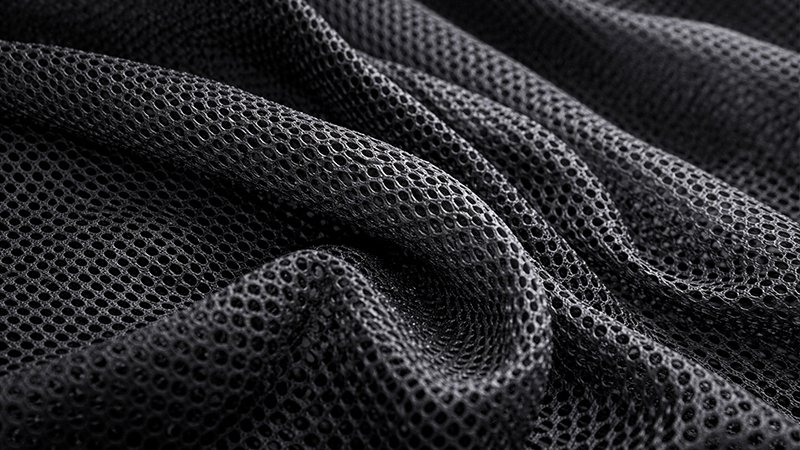
Mesh fabric is a unique textile defined primarily by its lightweight heft and permeable texture. Unlike standard fabrics that utilize a closely-woven structure to create a solid surface, mesh is woven loosely, resulting in a garment or material characterized by thousands of tiny holes.
This structural choice makes mesh one of the most breathable and versatile materials in the modern textile industry, serving purposes ranging from high-performance athletic wear to industrial filtration.
The Historical Evolution of Mesh
While the modern synthetic mesh we recognize today is a relatively recent invention, the concept of mesh has existed for thousands of years.
Historically, the “mesh” structure was used for utilitarian items such as fishing nets and hammocks, where strength and permeability were prioritized over coverage.
The transition of mesh from a utility tool to an apparel staple began at the end of the 19th century. The primary innovator in this field was Lewis Haslam, a British mill owner.
The inspiration for apparel-grade mesh reportedly came to Haslam during a cold-weather walk with his aunt.
Despite her gloves being riddled with holes, she insisted her hands remained warm, leading Haslam to experiment with loosely-knit fabrics that could trap air while remaining breathable.
Haslam subsequently founded Aertex, the world’s first dedicated producer of mesh fabric. While Aertex remained a dominant force for decades, the fabric reached a cultural zenith in the mid-1980s.
This surge was driven by two factors: the adoption of mesh as the primary material for Adidas sportswear and its frequent appearance on MTV, worn by popular culture icons of the era.
Today, while many companies produce mesh, the foundations laid by Haslam’s experimentation continue to define the material’s identity.
Composition and Manufacturing Process
The vast majority of modern mesh is composed of synthetic fibers, specifically polyester and nylon. The production of these fibers is a complex chemical process that begins with the refining of petroleum oil.
- Polymer Creation: From the refined oil, polyamide monomers are extracted. These monomers are then reacted with various acids to create polymers.
- Extrusion: These polymers, typically solid after the reaction, are melted and forced through spinnerets to create long polymer strands.
- Spinning and Dyeing: Once these strands cool, they are loaded onto spools. In most cases, manufacturers dye the fibers before they are woven into the final fabric.
- Weaving Patterns: The fibers are then woven into various configurations. A basic square pattern is common for traditional mesh, while more decorative or structural variants like Tulle often utilize a hexagonal structure.
The specific manufacturing techniques vary slightly between nylon and polyester, with polyester generally following more advanced manufacturing processes due to its later development in the textile timeline.
Core Properties of Mesh Fabric
Mesh is valued for a specific set of physical properties that make it ideal for active and industrial use:
- Breathability: Mesh is considered very breathable due to its open-weave structure.
- Stretch and Elasticity: It possesses high stretch ability, commonly referred to as “give,” which is essential for form-fitting garments.
- Weight: It is inherently lightweight, reducing the burden on the wearer during physical activity.
- Durability: Mesh is notably not prone to pilling or bubbling, which helps maintain its appearance over time.
- Moisture Management: While it has low heat retention, it offers medium moisture-wicking abilities, making it suitable for environments where sweat management is necessary.
- Density: The density of the fabric is measured in holes per inch (HPI), typically ranging from 6 to 16 HPI. Higher HPI results in a denser, less transparent fabric.
Diverse Types of Mesh Fabric
There are several specialized variants of mesh, each tailored for specific functional or aesthetic needs:
Polyester Mesh
This is the most common form found in athletic jerseys and workout apparel. It is prized for being incredibly lightweight and having a superior ability to wick moisture.
Because it does not become “bogged down” with sweat, it remains comfortable during intense physical exertion.
Nylon Mesh
While polyester dominates sportswear, nylon mesh is frequently used for industrial and niche applications. Its most iconic use is in beekeeping veils, but it is also used for tent screens, laundry bags, and occasionally lightweight evening dresses.
Tulle
Tulle is a fine, often hexagonal-shaped mesh most frequently used as an accent in dance garments. To create its signature textured, “poofy” appearance, it is often bunched. While usually made from synthetics, high-end tulle can sometimes be made from silk.
Power Mesh and Powernet
These variants are defined by their compression abilities.
- Power mesh is highly elastic and often used in shapewear to alter body contours, such as tightening the abdomen or raising the breasts. It is also used in home decor because of its sheer appearance.
- Powernet features a relatively dense weave and is used in high-support garments like bras, top tights, and control slips. These terms are often used interchangeably in the garment industry.
Practical Applications
The versatility of mesh allows it to span multiple industries:
- Sportswear: Mesh is the industry standard for jerseys in football, rugby, basketball, and wrestling. It is also ubiquitous in gym clothing produced by brands like Nike and Adidas.
- Shapewear and Lingerie: Due to its elasticity, mesh is a primary component in garments designed to conceal fat or provide support.
- Industrial and Utility: Beyond clothing, mesh is used for fishing nets, net bags, and screen printing tools.
- Footwear: It is used in casual and athletic footwear, such as breathable sandals with embellished designs.
Global Production and Economics
The production landscape for mesh has shifted significantly over the last century. Originally, the United Kingdom (via Aertex) and the United States were the primary producers.
However, in recent decades, China has emerged as the preeminent supplier of mesh fabric and the synthetic fibers (polyester and nylon) required to make it. Other major producers include India, Pakistan, and Indonesia.
The cost of mesh is influenced by the material used and the complexity of the weave. A simple, undyed square pattern is the most affordable.
In contrast, brightly-dyed hexagonal Tulle or mesh made from silk is significantly more expensive. Additionally, fabric sourced from Western nations often carries a higher price tag than that sourced from major Asian hubs.
Environmental Impact and Sustainability
Despite its utility, mesh fabric has a notably negative impact on the environment. This is largely because it is derived from petroleum oil, a non-renewable fossil fuel. The production process is energy-intensive and involves significant environmental risks:
- Resource Depletion: Using petroleum for fabric is considered unsustainable.
- Chemical Pollution: The production of nylon requires adipic acid, which releases nitrous oxide—a greenhouse gas 300 times more potent than CO2.
- Water Contamination: Large volumes of water used to cool molten polymers often reenter the ecosystem as contaminated waste.
- Microplastics and Waste: Because polyester and nylon do not biodegrade, mesh garments can remain in the ecosystem for thousands or millions of years, harming wildlife and clogging waterways.
Quality Standards and Certifications
To mitigate environmental impact and ensure quality, several certifications are available:
- Global Recycle Standard (GRS): This can be obtained if the mesh is made from 100 percent recycled materials.
- ISO 9001: This certification from the International Organization for Standardization ensures that the production meets standard quality rules regardless of origin.
- ANSI: The American National Standards Institute provides additional standardization for American companies, integrating ISO requirements.
Because mesh is almost exclusively synthetic, it is not eligible for organic certifications such as those from the USDA.
In summary, mesh fabric is a highly functional material that has evolved from basic survival tools like fishing nets into a sophisticated textile essential for modern sport and fashion.
While its breathability and elasticity make it indispensable, its reliance on petroleum-based synthetics presents ongoing environmental challenges that the industry continues to navigate through recycling and standardization.
FAQ
What defines mesh fabric?
Mesh fabric is typified by its lightweight heft and permeable texture. Unlike most fabrics with closely-woven textures, mesh is woven loosely, resulting in thousands of tiny holes in each garment.
What are the most common uses for mesh?
Mesh is widely used in the sporting world for athletic jerseys (football, basketball, etc.), workout apparel, and sports bras. Due to its elasticity, it is also a primary material for shapewear and lingerie, as well as industrial items like fishing nets and screen printing tools.
What materials is mesh fabric made from?
In almost every case, mesh is composed of synthetic materials such as polyester and nylon. These fibers are created through a chemical process that begins with the refining of petroleum oil to create polymers, which are then extruded into strands and woven into patterns.
Is mesh fabric environmentally friendly?
Generally, mesh has a notably negative impact on the environment. Because it is made from petroleum-based synthetics, it is considered unsustainable and does not biodegrade, meaning discarded garments can remain in the ecosystem for thousands or even millions of years.
Conclusion
Mesh fabric has evolved from ancient utility nets into a modern textile essential. Characterized by its permeable texture and high breathability, it remains a staple in athletic jerseys and performance sportswear.
While its high elasticity makes it ideal for shapewear and lingerie, the material faces significant environmental challenges.
This is due to its petroleum-based synthetic composition and lack of biodegradability. Today, China dominates global production as the preeminent supplier, though advanced certifications like the Global Recycle Standard aim to improve the material’s long-term sustainability.
Ultimately, mesh fabric offers an unparalleled balance of lightweight comfort and functional utility, ensuring its continued prominence across both industrial and fashion sectors throughout the entire world for many more years still to come in future.